Restaurants4 February 20269 min read
Inside BOK: Light, Floral Menus and a Thoughtful Dry January Experience in Münster
January is a moment of recalibration. The pace slows, attention sharpens, and dining becomes less about indulgence and more about intention. It was precisely in this context that BOK's January program came into focus.
From January 13 to 18, the Michelin-starred restaurant in Münster presented a limited Best Of Menu designed as a thoughtful way to begin the year. Rather than looking back, the menu was conceived as a forward-looking expression of what defines BOK today: lightness, precision, and a sense of flow that carries through the entire evening.
The colder weeks of January suited this approach particularly well. Floral accents, refined compositions, and a carefully structured progression promised an experience that felt composed and deliberate. BOK positioned this moment not as a seasonal compromise, but as an ideal setting to experience its culinary philosophy at its most focused.
BOK in Münster: A Michelin-Starred Room That Feels Personal
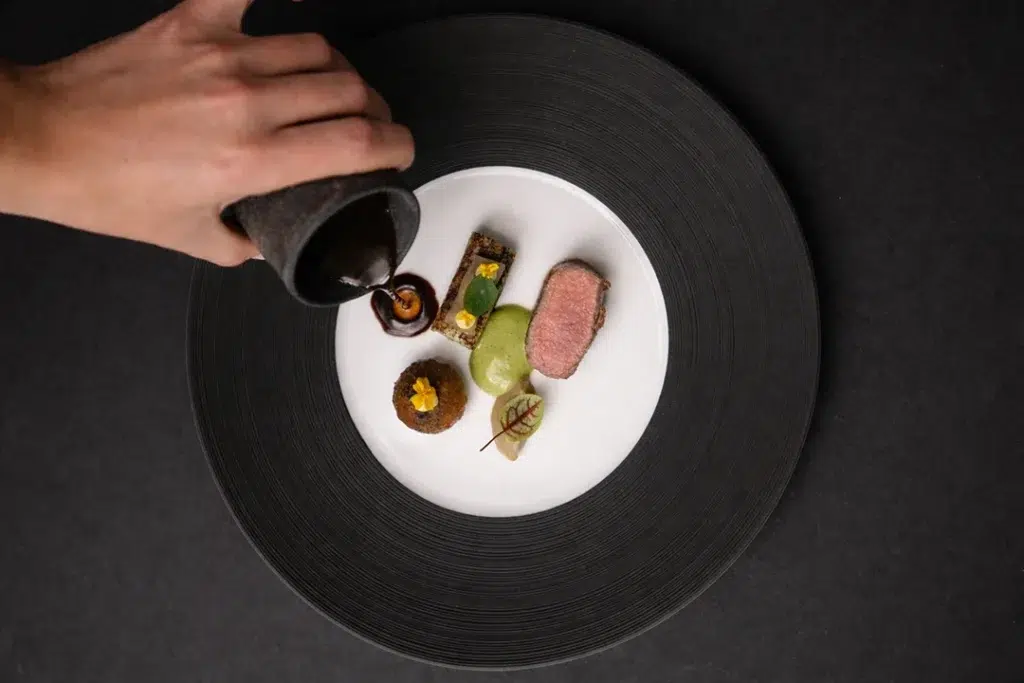
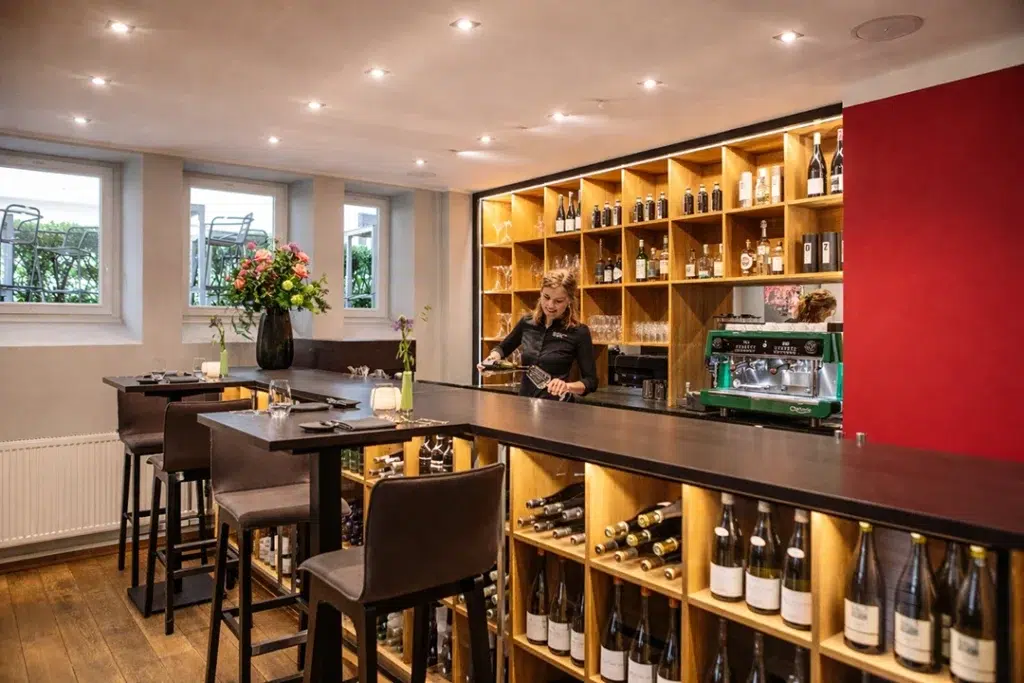
BOK, short for Brust oder Keule, is a Michelin-starred restaurant in Münster known for its modern, seasonal cuisine and a dining experience that remains intentionally personal. The restaurant's contemporary dining room is designed for a limited number of guests, creating an atmosphere that feels composed, intimate, and quietly elegant.
Rather than relying on formality, the space sets a tone of ease and clarity. Clean lines, restrained design, and a calm sense of proportion allow attention to remain where it belongs: on the food and the experience at the table. This balance between refinement and approachability defines the character of the restaurant.
Service reflects the same philosophy. Attentive, precise, and relaxed, the team creates an environment that feels welcoming without ever becoming casual. In Münster's fine dining landscape, BOK stands out by offering a modern interpretation of Michelin-level dining that feels confident, thoughtful, and human from the moment guests arrive.
A Kitchen in Rhythm With the Seasons
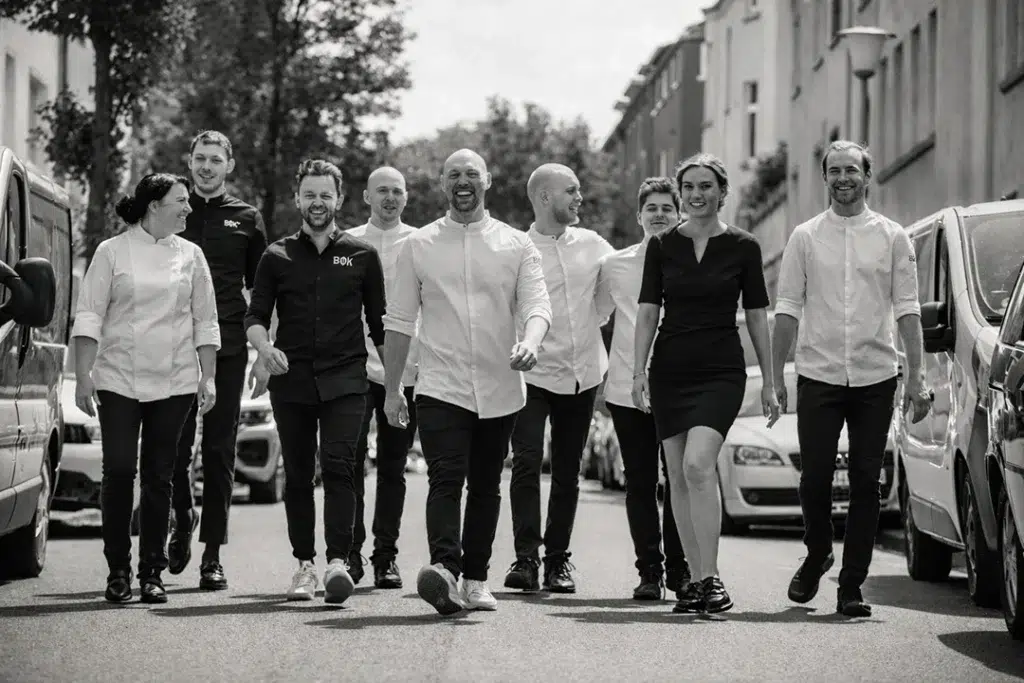
At the core of BOK's culinary direction is a kitchen that works in rhythm with the seasons. Led by chef Laurin Kux, the restaurant's menus are shaped by availability, freshness, and a clear sense of timing. This seasonal approach is not positioned as a concept, but as a natural framework for creativity and decision-making.
The cuisine draws on modern European foundations while remaining open to international influences. Techniques are precise and controlled, yet the results are designed to feel intuitive and accessible. Dishes are composed with clarity, focusing on defined flavors rather than layered complexity. This creates a style that feels contemporary without leaning into excess or overt experimentation.
As the January Best Of Menu approached, this philosophy became particularly relevant. The selection of dishes reflected how the kitchen had evolved across seasons, while remaining consistent in its commitment to balance, refinement, and restraint.

Lightness as a Signature: Floral Notes, Freshness and Flow
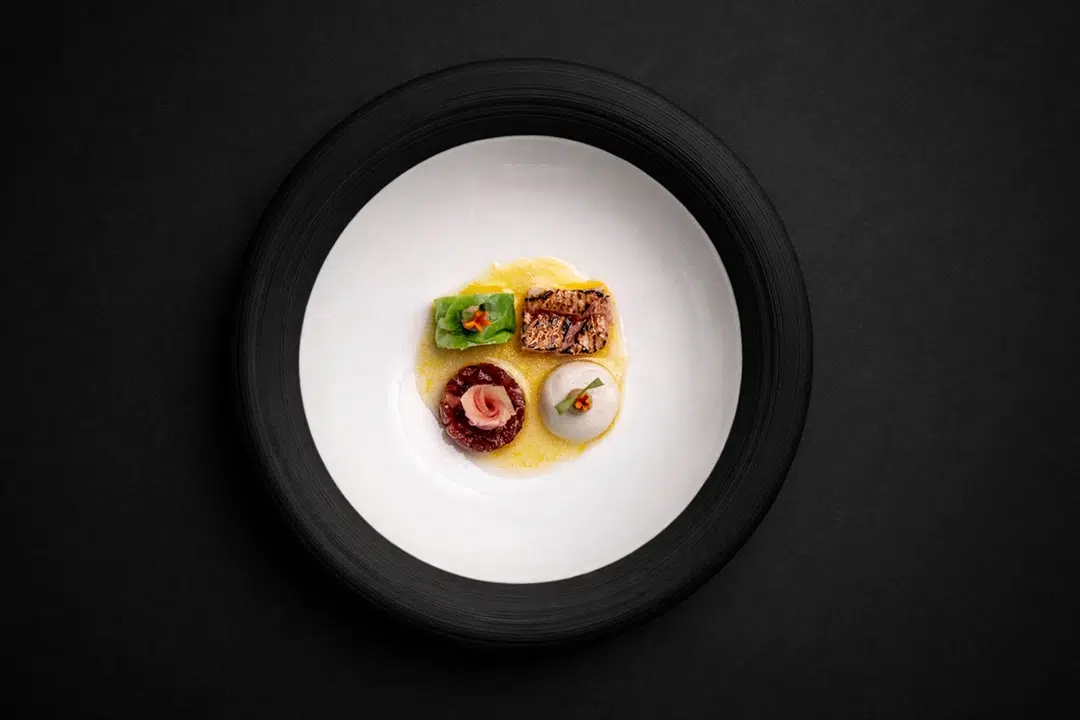
Lightness is a defining characteristic of BOK's cooking and one that shaped the structure of the January menu. Across the selection of dishes, floral notes, fresh aromatics, and carefully measured intensity were used to create lift rather than weight. These elements added clarity and openness, allowing flavors to unfold with ease.
This sense of lightness extended beyond individual plates. Portioning and pacing were designed to support a natural progression through the menu, ensuring that the experience felt composed and unforced. Each course was intended to contribute to an overall rhythm, rather than compete for attention.
In the context of January, this approach felt especially intentional. The menu was conceived to offer refinement without heaviness, creating an evening that felt focused, balanced, and quietly elegant from start to finish.
The January Best Of Menu: A Curated Retrospective
From January 13 to 18, BOK presented a limited Best Of Menu that brought together a selection of signature dishes from past seasons. Rather than functioning as a look back, the menu was conceived as a curated retrospective that highlighted the restaurant's culinary identity as it stood in that moment.
Each course had been selected for its ability to represent a defining aspect of the kitchen's evolution. The focus lay on refinement, clarity of flavor, and the sense of lightness that has become characteristic of BOK's style. For returning guests, the menu offered the opportunity to reconnect with familiar ideas in a new context. For first-time visitors, it provided a concentrated introduction to the restaurant's approach.
Set within the calm rhythm of January, the Best Of Menu was designed to be experienced as a cohesive narrative. It was less about individual highlights and more about how the dishes related to one another, forming a composed and deliberate progression through the evening.

Dry January at Fine Dining Level
The January Best Of Menu was developed with a clear Dry January focus, positioning alcohol-free dining as an integral part of the experience rather than an alternative. BOK approached this period not as a limitation, but as an opportunity to rethink balance, structure, and pairing across the menu.
Guests who chose to dine without alcohol were offered the same level of consideration and depth as those opting for wine. The kitchen and service team had designed the menu so that each course stood confidently on its own, supported by carefully crafted non-alcoholic pairings that complemented the food's character.
In this context, Dry January became a conscious choice aligned with BOK's philosophy of lightness and precision. The result was a fine dining experience that felt complete, thoughtful, and fully resolved, without relying on alcohol to create complexity or pleasure.
Inside the Non-Alcoholic Pairings
To accompany the January Best Of Menu, BOK offered a dedicated non-alcoholic pairing developed entirely in-house. These beverages were conceived with the same level of care and precision as a traditional wine pairing, following a gastronomic rather than substitutive approach.
Each pairing was designed in direct dialogue with the dish it accompanied. Acidity, sweetness, texture, and aromatic profile were carefully calibrated to support and enhance the food's structure. Some drinks were intended to refresh and create contrast, while others deepened flavor or echoed subtle notes on the plate. Together, they formed a considered progression that mirrored the flow of the menu.
By treating non-alcoholic pairings as an integral element of the experience, BOK elevated alcohol-free dining to fine dining level. The beverages became part of the narrative, reinforcing the idea that thoughtful pairing is defined by balance and intention, not by alcohol content.
Signature Moments: Carabinero as a Centerpiece
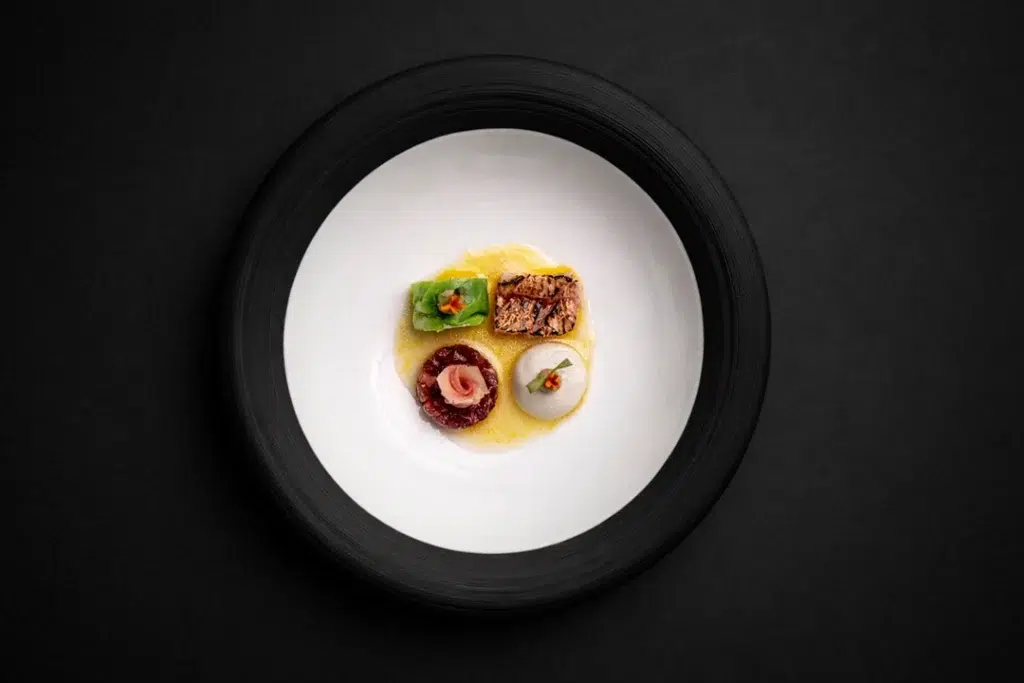
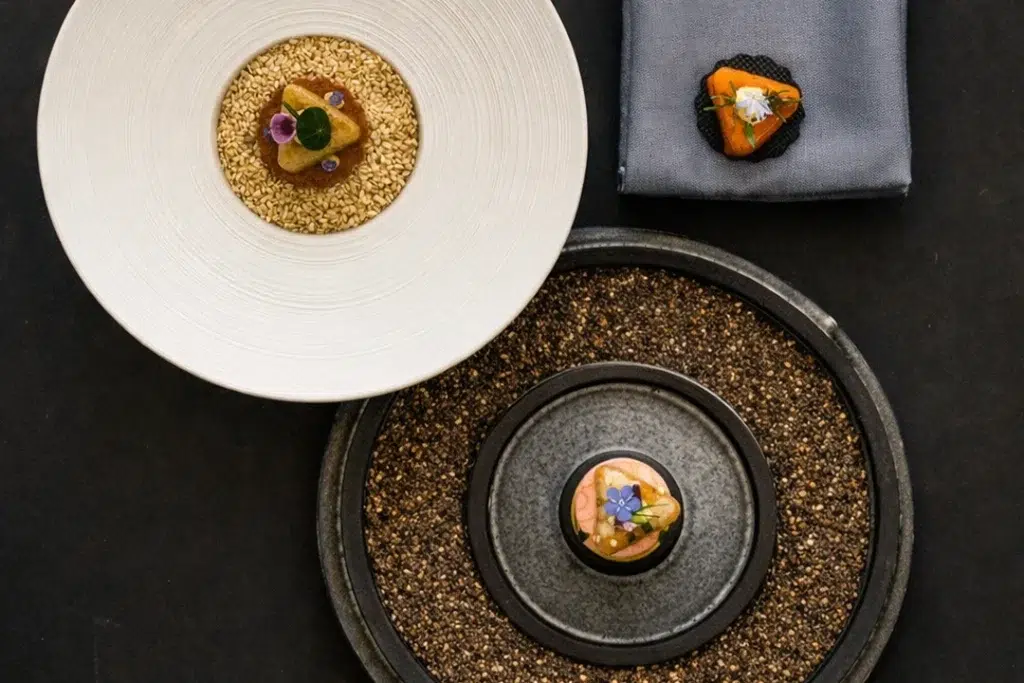
Among the dishes featured on the January Best Of Menu, the Carabinero was positioned as a defining centerpiece. Valued for its deep, almost sweet intensity and pronounced savory character, this ingredient requires both confidence and restraint in its preparation.
At BOK, the Carabinero was approached with clarity and focus, allowing its natural character to remain at the forefront. The dish reflected the kitchen's precision and its ability to work with exceptional ingredients without overwhelming them. Presentation remained composed, supporting the ingredient rather than competing with it.
Within the structure of the Best Of Menu, the Carabinero served as a moment of depth and emphasis. It anchored the progression of the evening while remaining aligned with the restaurant's broader philosophy of balance, lightness, and control.
A Drink Worth Remembering: Piedmont Hazelnut Lemonade
One of the standout elements of the non-alcoholic pairing accompanying the January Best Of Menu was the house-made Piedmont hazelnut lemonade. Conceived as a gastronomic beverage rather than a refreshment, it reflected the same attention to balance and structure found in the kitchen's dishes.
Toasted Piedmont hazelnuts provided depth and a subtle warmth, while citrus brought freshness and lift. The interplay between nuttiness and acidity created a layered profile that could stand alongside complex courses, offering both contrast and continuity. Rather than merely cleansing the palate, the drink was designed to interact with the food, supporting and extending flavors.
As part of the Dry January experience, the hazelnut lemonade exemplified BOK's approach to non-alcoholic pairing. It demonstrated how much care was invested in these beverages, positioning them as highlights in their own right rather than secondary accompaniments.
Service, Pacing and the Human Element
The January Best Of Menu was supported by a service style that mirrored the restaurant's culinary philosophy. Attentive, composed, and relaxed, the team guided guests through the evening with clarity and ease, ensuring that the experience felt natural rather than orchestrated.
Pacing played a central role in this approach. Courses were planned to arrive in a measured rhythm, allowing each dish and pairing to register without interruption. This sense of flow reflected close coordination between kitchen and service, reinforcing the menu's overall structure.
By prioritizing attentiveness over formality, BOK created an environment where guests could fully engage with the food and the moment. The human element became an essential part of the experience, tying together cuisine, pairing, and atmosphere into a cohesive whole.
Why the Best Of Menu Mattered
The January Best Of Menu represented a concise expression of BOK's culinary identity. By bringing together selected dishes from past seasons, the menu highlighted the principles that continue to define the restaurant: precision, balance, and a sense of lightness that runs through both cuisine and experience.
For guests discovering BOK for the first time, the menu offered a clear entry point into the kitchen's way of thinking. For returning visitors, it provided context and continuity, showing how certain ideas and flavor signatures had evolved while remaining recognizably consistent. In both cases, the menu functioned as a carefully structured narrative rather than a collection of highlights.
Positioned within the framework of Dry January and supported by a dedicated non-alcoholic pairing, the Best Of Menu underscored BOK's ability to reinterpret fine dining without compromising depth or sophistication. It demonstrated that refinement is defined by intention and clarity, not by excess.
Closing: A Thoughtful Way to Dine in January
From January 13 to 18, BOK's January Best Of Menu offered a considered way to approach fine dining at the start of the year. Light compositions, attentive pacing, and carefully crafted non-alcoholic pairings came together to form an experience that felt deliberate and composed.
Rather than presenting January as a transitional month, BOK treated it as an opportunity for focus and refinement. The menu reflected a calm confidence, inviting guests to engage with the food on its own terms and at its own rhythm.
For those who sought to begin the year with intention and clarity, this limited menu presented a compelling invitation. It was a reminder that fine dining, when approached with thoughtfulness and restraint, can feel especially resonant in January.
More from the Magazine

Fire, Sea and Salt: The Essence of Basque Country Cuisine
The Basque Country is a region where fine dining begins with three elemental forces: fire, sea and salt. Together, they form the foundation of a cuisi…
Restaurant ZOE in Bern: Winter Flavours and a New Chapter in Vegetarian Fine Dining
In the heart of Bern, winter has a particular way of sharpening the senses. Days grow shorter, flavours deepen, and meals become moments of warmth and…
Restaurant Heimatjuwel in Hamburg: Vegetable-Driven Fine Dining with Regional Focus
Tucked away in Hamburg’s Eimsbüttel district, Restaurant Heimatjuwel is one of those places that quietly reshapes expectations without ever feeling th…